EVERBROOK IS HIRING? CLICK HERE


CONCIERGE SERVICE
Monday - Sunday
8:00am - 8:00pm
SCHEDULE A VISIT
Tour any of our communities. Click here to get started.
CORPORATE OFFICE
162 College Highway
Southampton, MA 01073
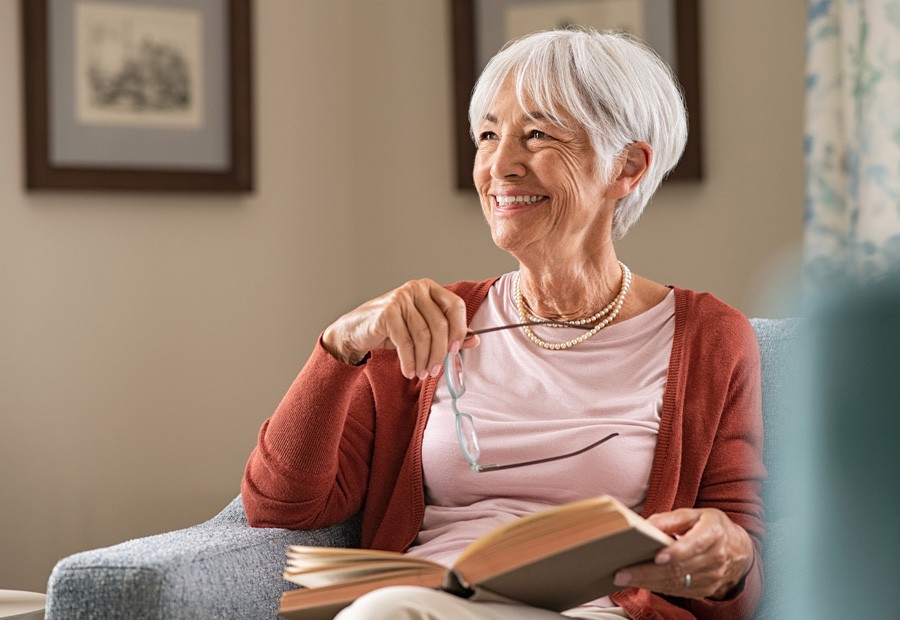
National Book Month is the perfect time for older adults to gather together with a group of like-minded bookworms to celebrate your love of a good story. Every October, National Book Month coincides with the announcement of the National Book Awards, bringing attention to the importance of literature and literacy, encouraging people of all ages to immerse themselves in the joy of reading, writing, and sharing stories. We’ve put together tips to help older adult “book lovers” start a book group and infuse fun and fancy into your group meetings.
Basic Guidelines for Older Adult Book Groups
Before we jump into book club ideas, we want to remind you of a few basic guidelines to help ensure your group is successful and fun for all:
3 Hits
Unlike most major league sports, baseball seems to harken us back to a more nostalgic time. Whether you have grandkids visiting or are gathered with friends at your senior living community, we can’t think of a better way to enjoy the World Series than by baking cookies while watching the game.
Check out our favorite recipes (and we've tested many!), then pair your baking with a classic baseball flick before the games begin. Remember, baseball games seem to go on forever… so you’ll need a lot of cookies!
Back to the Sandlot
1 Hits
There’s power in the written word, particularly in reading stories and books that convey a shared experience, shedding light on the ways in which we might, in our own lives, cope with a challenge, heal from a loss or trauma, or become more informed before making difficult decisions for ourselves or for a loved one. All of these are reasons we might turn to reading, both fiction and nonfiction, about how other people navigate a diagnosis of dementia or Alzheimer’s disease.
Several authors have written about dementia and Alzheimer’s disease, exploring how to come to terms with the diagnosis, tips for seeking care, and finding hope and meaning in the days that remain to be lived.
Below, we highlight a few of these authors and their memoir, novel, or non-fiction ‘practical guide.’ Not just for adults, you’ll find books that can be helpful for young adults and children who will also need support as they witness mental decline in a beloved family member.
2 Hits
A therapeutic innovation launched during the COVID-19 pandemic is making its way into mainstream care of older adults who live alone and those who have dementia. Lifelike robotic cats and dogs are an effective way to help seniors enhance social interaction, improve symptoms of depression, and reduce feelings of loneliness. These robotic pets can even be purchased by family members to gift to a loved one – perfect for the holiday season.
Loneliness Increases among Older Adults in Winter Months
Feelings of loneliness, depression, and isolation can increase dramatically during the winter months, particularly around the holiday season. Among older adults, these feelings can become overwhelming – worsening their symptoms and increasing risk for accidents and even suicide. Research shows that something as simple as a lifelike pet cat or dog can significantly improve wellbeing for older adults, including those with Alzheimer’s Disease and other dementias.
1 Hits
Addressing Vitamin D Deficiency in Later Life?
Could sun dried mushrooms and tank-top shirts be keys to reducing vitamin D deficiencies in later life thus reducing fall risks? Well, yes and let’s discuss why. Vitamin D is often called the sunshine vitamin as it is made from cholesterol in skin and as the sun’s ultraviolet B (UVB) penetrate skin cells it causes production of vitamin D3. 1The dilemma for seniors is that older skin cannot synthesize vitamin D as efficiently while outside activities are often greatly reduced: and, while there are few foods that actually contain vitamin D, older seniors need more vitamin D, approximately 800 IU (international units) daily, as opposed to 600 IU daily for their younger counterparts. 2(According to the Institutes of Medicine, a serum 25 (OH) D level of 25 ng/ml is adequate for most populations while deficiency is defined as less than 20 ng/ml, with insufficiency being less than 30 ng/ml. Through a process called hydroxylation, the liver and kidneys turn stored vitamin D into an active form the body uses.)
Vitamin D Deficiency is Linked to Poorer Health
Because older adults are vulnerable to muscle weakness and falls, maintaining sufficient levels of vitamin D is important: there is evidence that sufficient vitamin D levels can strengthen bone and muscles in older adults which leads to reductions in falls3 – the primary benefit of vitamin D is to maintain serum calcium and phosphorus levels within normal ranges to support metabolic function, neuromuscular transmission, and bone mineralization.4 In fact, vitamin D deficiencies are linked to a multitude of health risks. For seniors in later life, vitamin D deficiency has been linked in studies to such conditions as cognitive decline, depression, osteoporosis, diabetes, cardiovascular disease, and cancer, although there is debate about the strength of the link. 5Vitamin deficient older adults living in areas prone to inadequate exposure to sunlight have increased risk of experiencing cognitive decline. 6Vitamin D deficient older adults may experience a loss of bone density which causes fractures and falls.7 Vitamin D deficient older adults may experience increases of risk factors for cardiovascular disease. 8Vitamin D deficient older adults may experience increases of risk factors for depression and other psychiatric conditions.9
2 Hits
Navigating the variety of options for care for an older adult family member can quickly become confusing. Many different names are used to describe the various types of older adult care facilities. In reality, there are just two primary types of elder care: nursing home and assisted living community. Understanding the differences between nursing home and assisted living can make the process of choosing elder care less stressful and more reassuring for all involved.
Elder Care Defined: Nursing Home vs. Assisted Living
A nursing home, also known as a skilled nursing facility (SNF), is permitted to provide extensive nursing and medical, under the supervision of a practicing physician. Nursing homes are equipped to perform near-constant monitoring of individuals who require extensive care due to physical disability, cognitive impairment, and/or unstable chronic health conditions. Depending on the degree of severity and prognosis for recovery, a person’s length of stay at a nursing home can be a short-term (several weeks) or long-term (months or years). For the latter, the nursing home may be referred to as a long-term care (LTC) facility.
Another important distinction is that a nursing home is a custodial arrangement in which the medical staff are the custodians of care for the older adult. In a custodial arrangement, the room to which your loved one is assigned is not their private dwelling. Because nursing homes follow a medical model of custodial care, medical staff and other personnel may enter the room at any time.
2 Hits

Bringing the Best Solutions
to Seniors in Later Life.
162 College Highway
Southampton, MA 01073
Southampton, MA 01073